Back Closure vs Overhead Sports Bra: Which One Actually Fits a Fuller Bust
Quick Answer: For a fuller bust, a back closure with multiple hook rows almost always fits better than an overhead pullover, because it lets you set band tension independently of how much stretch you need to get the bra on. Pullover styles have to be loose enough to pass over your shoulders, which usually means the band is under-tensioned exactly where support comes from. Choose a closure with at least two hook columns, wide-set straps, and a band you fasten on the loosest row when it’s new.
You’ve been told to size down the band and size up the cup, you did it, and the bra still rides. The band isn’t the only variable. How you get into the thing is.

Why does closure style change the fit so much?
A pullover bra has to stretch enough to clear your shoulders and ribcage. That stretch requirement sets a floor on how loose the band can be, and for a fuller bust that floor is usually looser than the band tension you actually need for support.
Support comes overwhelmingly from the band, not the straps. Fitting guidance across the industry puts the majority of a bra’s support in the underband, which means anything that forces the band to be stretchier is directly reducing support.
A hook-and-eye closure decouples the two jobs. You open it to get in, then close it at the tension that fits. Those are separate decisions, which is the entire advantage.
Multiple hook rows give you a lifespan, not just a size. Elastic relaxes with wear. Starting on the loosest row means you have two tightening steps before the bra is genuinely finished, which is often another several months of use.
And the closure changes where pressure lands. A wide hook panel spreads band tension across a broad area of the back; a narrow pullover band concentrates it, which is where the digging and the red marks come from.
How do you judge a closure in the fitting room?
Fasten on the loosest row and pull the band away from your back. It should lift about an inch or so and no further. If it lifts easily on the loosest row, the band is too big regardless of what the label says.
Check the band stays level all the way round. A band that rides up at the back is the single most common fuller-bust complaint, and it usually means the band is too loose, not that the straps are too long.
Do the jump test with your arms down, then with your arms overhead. Arms overhead is where a poorly-tensioned band lifts off the ribcage completely. If the band travels north when you reach up, it will travel north during a run.
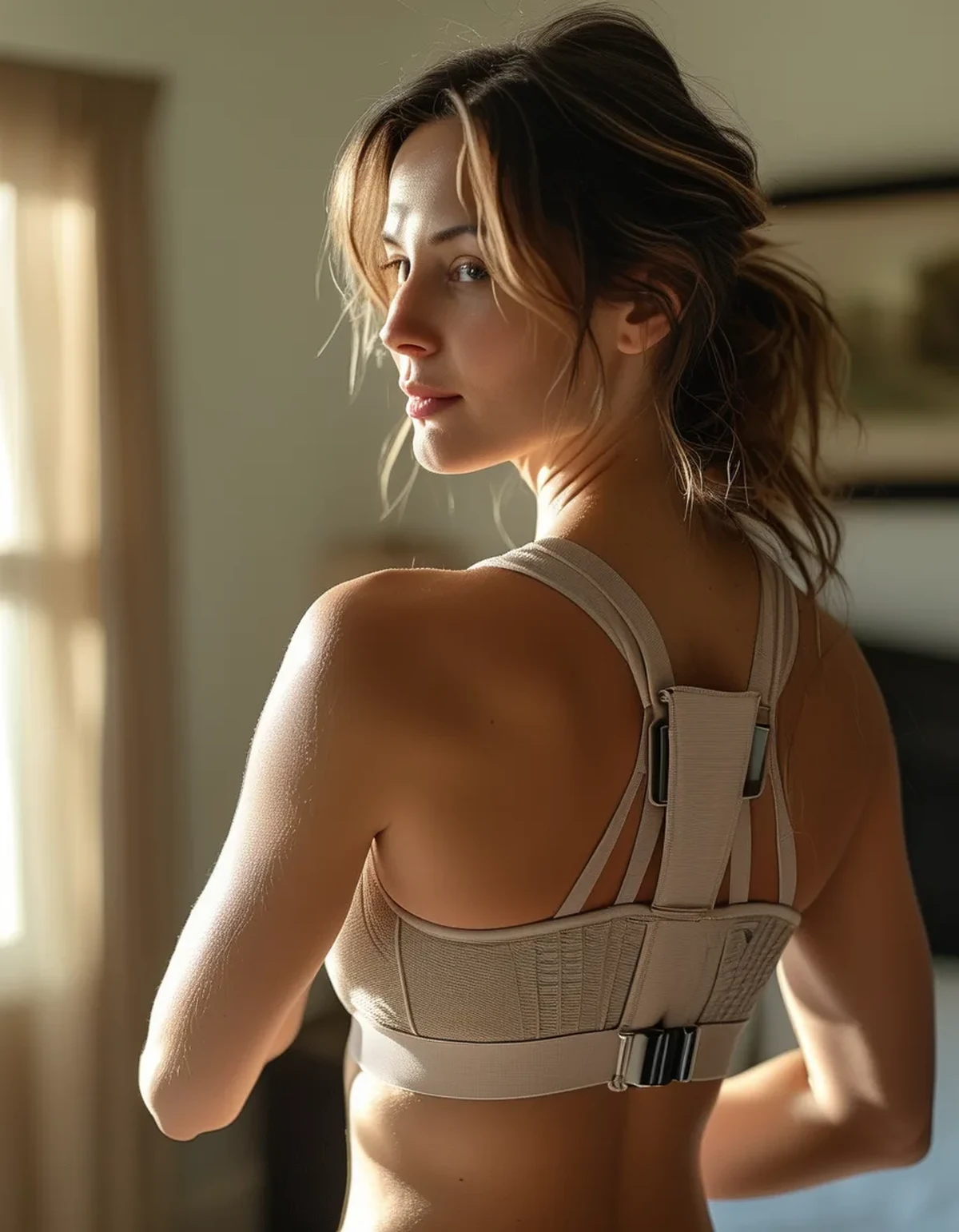
Look at the hook panel width. Wider panels with three or four columns distribute pressure and give you more adjustment. Two columns is workable; one is a compromise.
Test whether you can fasten it yourself. A closure you can only manage on a good day is one you’ll stop wearing. Front-closure and step-in-then-hook designs exist for exactly this reason.
And check the straps separately. Wide-set, wide straps that sit closer to your neck carry weight better than narrow racerback straps for a fuller bust, and they’re less likely to dig into one shoulder more than the other.
Myth vs Fact: Sports Bra Closures
Myth: Pullover bras are always lower support. Fact: some pullover designs are genuinely high support, using compression plus encapsulation. But they achieve it with a very firm band that’s a fight to get on, and most people size up to make that manageable - which is where the support goes.
Myth: Hooks dig into your back during exercise. Fact: a wide hook panel spreads load better than a narrow band. Digging is a symptom of a band that’s too tight or too narrow, not of hooks as a concept.
Myth: Racerback always means more support. Fact: racerback changes strap geometry and stops slippage on narrow shoulders. It doesn’t add band support, and on a fuller bust it can concentrate pressure into a small area between the shoulder blades.
Myth: You should buy a sports bra that’s tight on the tightest hook. Fact: buy it fitting correctly on the loosest hook. The tighter rows are your budget for the next year of elastic relaxation.
Myth: Front-closure bras aren’t supportive. Fact: front closures with a properly engineered band work well and solve the reach-behind problem entirely. The design just has to include a real band rather than a decorative one.
What should you look for as your training changes this season?
Indoor training season is coming, and it changes the demands. Studio and gym sessions involve more floor work, more overhead reaching, and more lying down than summer running does - all situations where a band that lifts off becomes obvious.
Layering makes closures matter more. Under a long-sleeve top or a jacket, you can’t quietly adjust a bra that’s shifted. Set-and-forget band tension is worth more once you’re layered.
Cooler air means less sweat and slightly different fit. Fabric that was damp and clingy in August behaves differently in October. A bra that felt secure through humidity can feel looser once the sweat isn’t holding it in place.
Rotate rather than reaching for the same one. Elastic recovers with rest. Three bras rotated last considerably longer than one worn constantly, and the rotation makes it obvious when one has gone soft.
And re-measure when your training volume changes. Ribcage and bust measurements shift with weight, cycle phase, and training load, and the start of a new routine is a sensible checkpoint.
This is general information, not medical advice. Persistent pain, numbness, or skin damage from a bra is worth raising with a clinician or a professional fitter rather than solving by buying another size.
FAQ: Sports Bra Closures, Answered
Is a back closure better than a pullover for a large bust?
Usually yes, because it lets you set band tension independently of how stretchy the bra needs to be to get on. Pullover designs have to be loose enough to clear your shoulders, which caps how much band support they can provide.
Which hook row should a new sports bra fit on?
The loosest one. The tighter rows are there to compensate as the elastic relaxes over months of wear, and starting on the tightest row means the bra is effectively finished as soon as it softens.
Why does my band ride up at the back?
Almost always because the band is too loose, not because the straps are too long. Tightening straps to compensate pulls the back of the band upward, which makes it worse.
Are front-closure sports bras supportive enough?
They can be, provided the design includes a genuine engineered underband rather than a token one. They solve the reach-behind problem, which matters more than most fitting guides admit.
TL;DR:
- Closure style sets the ceiling on band support, and the band is where most support comes from.
- Pullover designs must stretch enough to clear your shoulders, which usually leaves the band under-tensioned.
- Buy fitting correctly on the loosest hook row so you have adjustment left as elastic relaxes.
- Wide hook panels spread pressure; narrow bands concentrate it, which is what digs.
- Re-check fit as you move to indoor training, and rotate bras so elastic gets recovery time.
If your band rides up, tightening the straps makes it worse. Fix the band first and the straps mostly stop mattering.
See It in Motion
Seen here: Racerback Tank Top - White — shop similar styles on bubblelime.com
Keep Reading
This article is for general informational and styling purposes only. Fit, sizing, and product availability may vary.