Standing Tall With a Fuller Bust: The Posture Guide Nobody Wrote
Quick Answer: Forward-rounded shoulders with a fuller bust are a load problem, not a discipline problem. Fix it with three things: strengthen the upper back (band pull-aparts, wall slides, chin tucks — 90 seconds daily), get a properly fitted bra where the band does the supporting, and do a 10-second shoulder reset once an hour.
Nobody hands you the memo. A fuller bust is a daily load-bearing project, and your upper back is the crew working it without overtime pay.
The forward round creeps in quietly. Part gravity, part bra failure, part twenty years of habit.
All three are fixable line items — and none of them respond to being told to stand up straight.

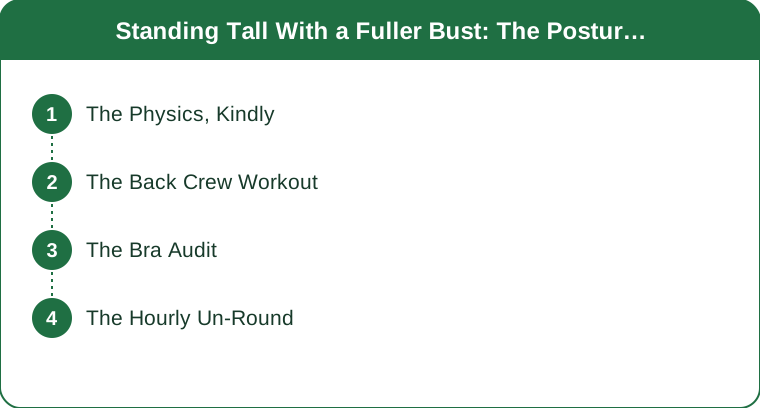
Why does a fuller bust pull the shoulders forward?
Because of where the weight sits relative to your spine.
Mass positioned in front of the spine creates a constant forward-rotating force on the upper body. The muscles between your shoulder blades — rhomboids, mid and lower trapezius — have to work continuously to counteract it. When they fatigue, the body settles into its lazy equilibrium: shoulders rounded, upper back curved, head drifting forward.
And a forward head position multiplies the problem. The head weighs roughly 10–12 pounds upright, and the effective load on the neck increases substantially as it moves forward of the shoulders — which is why the neck and upper trapezius ache by mid-afternoon.
The important reframe: this is a load problem, not a discipline problem.
Trying to fix it by remembering to stand up straight fails by 10 a.m., every time, because you’re asking a fatigued muscle to hold a position it isn’t strong enough to hold. The actual fix is strength behind and support underneath. That’s the whole plan, and everything below is one of those two things.
What exercises help posture with a fuller bust?
Three moves, ninety seconds, daily. The point is frequency, not intensity.
1. Band pull-aparts — 15 reps. Hold a light resistance band at shoulder width, arms straight out in front. Pull outward until the band touches your chest, squeezing the shoulder blades together. Return slowly. This is the single highest-value exercise for rounded shoulders — it works exactly the muscles losing the fight.
2. Wall slides — 10 reps. Stand with your back against a wall, feet a few inches out. Press the backs of your hands and forearms to the wall in a goalpost shape, then slide them up overhead while keeping contact. Most people can’t keep full contact at first — that’s the point, and it improves within weeks.
3. Chin tucks — 8 reps. Gently draw your chin straight back, creating a double chin, and hold for 3 seconds. This retrains the deep neck flexors that hold your head over your shoulders instead of in front of them.
Do all three daily. Ninety seconds. That’s less time than choosing something to watch.
Why daily and short beats weekly and long: postural muscles are endurance muscles, and they respond to frequent, low-load practice far better than to occasional hard sessions. Strong rhomboids turn standing tall from an effort into a default. The crew just needed payroll.
Progress to add: seated or bent-over rows with a band or light dumbbells, twice a week, once the daily three feel easy.
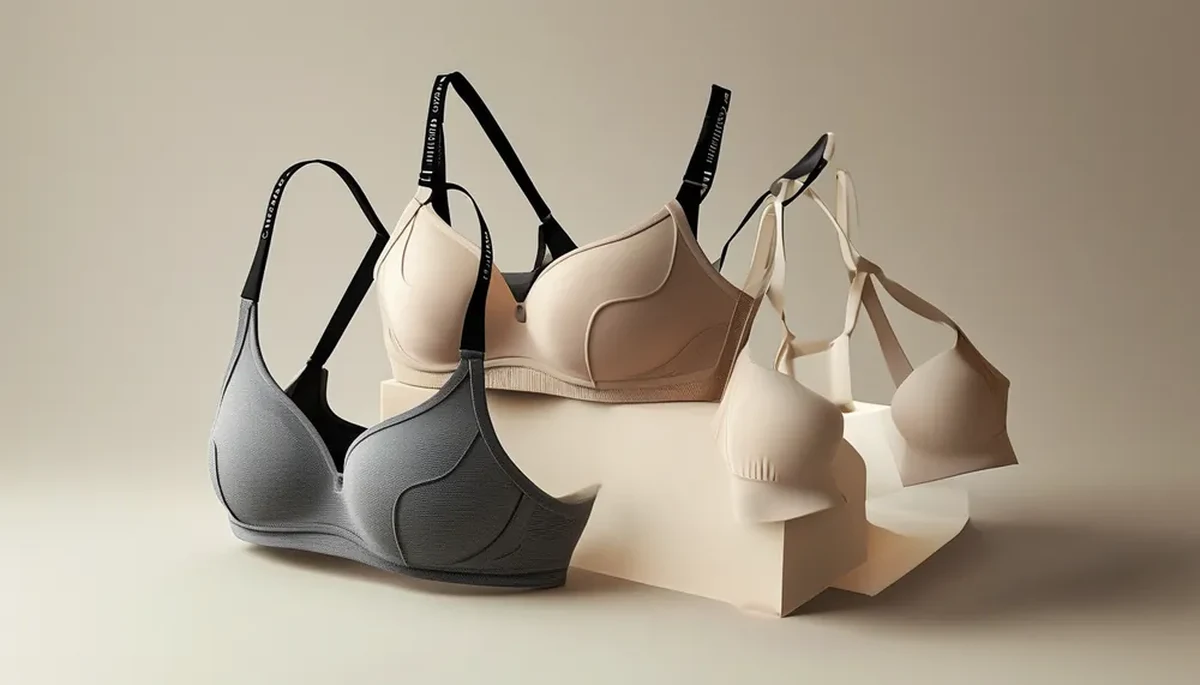
How does bra fit affect posture?
More than almost anything else here, and it’s the fastest fix available.
Roughly 80% of a bra’s support comes from the band, not the straps. When the band is too loose, the bra rides up at the back and the load transfers to the straps — which means it transfers to your shoulders and neck. Hence the grooves, the aching traps, and the deepening round.
The signs your band is too loose:
- The back of the bra rides up above the front
- Deep strap grooves in your shoulders by lunchtime
- You’re wearing it on the tightest hook and it still moves
- You can pull the band more than about an inch away from your back
What a correct fit looks like: the band sits level and firm all the way around, on the loosest hook when new (so you can tighten as it stretches). Underwires sit flat against the ribcage, not on breast tissue. Straps carry only a small share of the weight and shouldn’t need constant tightening.
Sister sizing is the thing most people don’t know: if the band is too loose, going down a band size means going up a cup size to keep the same volume. A 36D and a 34DD hold the same amount — they just distribute the support differently, and the smaller band supports far better.
A professional fitting is posture care disguised as shopping. Most people are in the wrong size, and the correction often relieves shoulder and neck strain within days.
For exercise, the same logic applies with more force — a properly fitted high-support sports bra with a firm band does more for comfort during any impact activity than any amount of strap tightening.
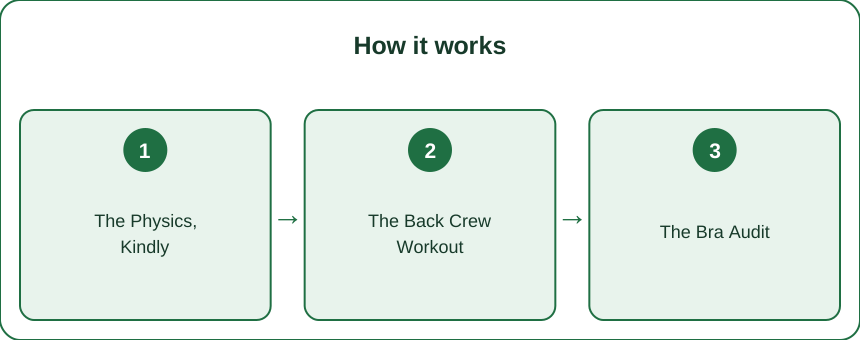
What’s the hourly reset?
Ten seconds, once an hour. Invisible to anyone watching.
- Roll the shoulders up, back, and down — twice
- Squeeze the shoulder blades together and hold for five seconds
- One slow breath, letting the ribs expand
That’s it. Do it at your desk, in a meeting, in the car at a red light.
Why this works when “sit up straight” doesn’t: you’re not trying to hold a corrected position for an hour, which is unsustainable. You’re interrupting the accumulated drift every hour and resetting to neutral. The muscles get repeated short practice rather than one long failed attempt.
Set a recurring reminder for the first two weeks. After that it starts happening on its own, usually triggered by the first hint of that familiar upper-back tightness.
Posture is won in ninety-second installments, not in resolutions.
5 Mistakes Everyone Makes
- Tightening the straps to fix a loose band. This is backwards, and it’s what causes the shoulder grooves in the first place.
- Stretching the chest without strengthening the back. Stretching feels good for twenty minutes; strength is what holds the position.
- Trying to fix posture by remembering. Willpower against a fatigued muscle loses by mid-morning.
- Assuming your bra size is stable. It changes with weight, hormones, and age — and band elastic degrades within about a year of regular wear.
- Going big on the workout and skipping the daily 90 seconds. The one that quietly fails — postural muscles need frequency, not heroics.
FAQ
Can exercise reduce upper back pain from a large bust?
For many people, yes — strengthening the upper back and improving bra fit are the two interventions most commonly recommended, and both are low-risk to try. Give it six to eight weeks of consistent daily work before judging results. If pain is severe, radiates into the arms, or comes with numbness or tingling, see a physician or physical therapist rather than working through it.
How do I know if my bra fits properly?
The band should sit level and firm all the way around, fastening on the loosest hook when the bra is new. Underwires should lie flat against your ribcage without sitting on breast tissue. Straps should carry only a small share of the weight. If the band rides up at the back, it’s too loose — go down a band size and up a cup size.
Will strengthening my back change how my bust looks?
It changes your posture, which changes how everything sits and reads. Standing upright with the shoulders back typically makes the whole upper body look more supported and open. It doesn’t change breast tissue itself — the pectoral muscles underneath can be strengthened, but they don’t lift breast tissue in the way sometimes claimed.
When should I see a professional?
See a physical therapist or physician if you have persistent upper back or neck pain that isn’t improving, pain radiating down an arm, numbness or tingling in the hands, headaches originating at the base of the skull, or deep permanent strap grooves. A physical therapist can assess whether something beyond load and posture is contributing, and in some cases persistent pain related to breast size is a medical conversation worth having openly.
TL;DR:
- Forward rounding is a load problem, not a discipline problem — willpower won’t fix it
- Daily 90 seconds: 15 band pull-aparts, 10 wall slides, 8 chin tucks
- 80% of support comes from the band. A loose band dumps the load on your shoulders
- Sister sizing: down a band size means up a cup size
- Hourly 10-second reset — roll, squeeze, breathe
- Frequency beats intensity; postural muscles are endurance muscles
- See a professional for radiating pain, numbness, or persistent headaches
The load is real and so are the fixes. Standing tall with a fuller bust is engineering, and you just got the blueprints.
See It in Motion
Seen here: UPF 50+ Racerback Yoga Tank Top — shop it on bubblelime.com
Keep Reading
This article is for general informational and styling purposes only. Fit, sizing, and product availability may vary.