Why Your Sports Bra Band Size Matters More Than the Cup
Most sports bra shopping focuses almost entirely on cup size, when band size is actually doing the majority of the real support work. A loose band undermines even the most technically advanced sports bra, and the mismatch is more common than most people realize.

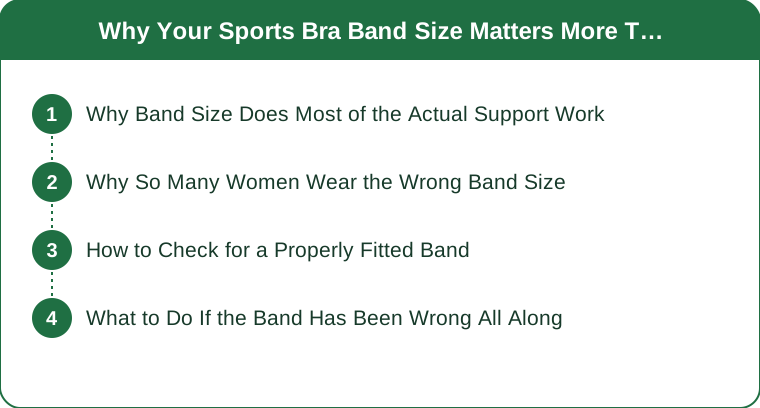
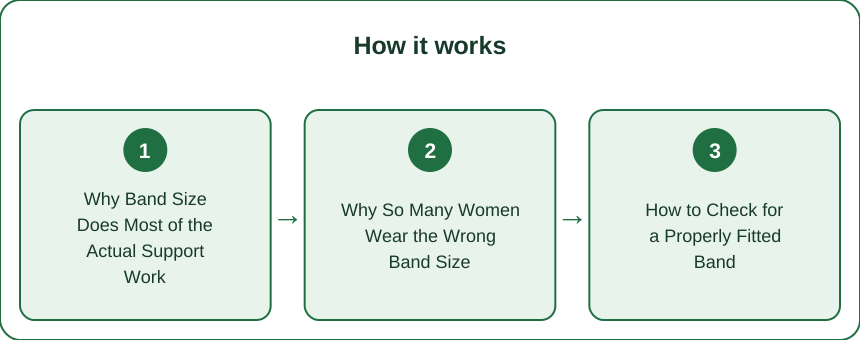
Why Band Size Does Most of the Actual Support Work
The mechanical reality: the the-band-provides-primary-anchor-support (the band, not the cup or straps, providing the primary anchor point that holds a sports bra in place during movement, meaning a loose band undermines support regardless of cup quality), the the-straps-are-secondary-support-only (shoulder straps functioning as secondary, fine-tuning support rather than primary support, meaning tightening straps to compensate for a loose band doesn’t actually solve the underlying support gap), the the-band-stretch-over-time (bands naturally stretching out gradually with wear and washing, meaning a band that fit well when new may already be providing meaningfully less support months later)).
Why So Many Women Wear the Wrong Band Size
The common mistakes: the the-inherited-sizing-assumption (many women simply continuing to buy the band size they were originally measured at years earlier without rechecking, even though body composition and band stretch both change that number over time), the the-cup-size-prioritized-in-shopping (shopping primarily by cup size and treating band size as a secondary afterthought, backwards from how the actual support mechanics work), the the-loose-band-mistaken-for-comfort (a band that’s actually too loose sometimes getting mistaken for a comfortable, non-restrictive fit, when true comfort with proper support should include a snug, non-riding-up band).

How to Check for a Properly Fitted Band
The fit test: the the-two-finger-snugness-test (a properly fitted band allowing about two fingers to slide underneath at the tightest hook position, snug but not restrictive), the the-band-stays-level-test (a well-fitted band staying roughly horizontal all the way around during movement, rather than riding up noticeably in the back), the the-hook-position-progression-check (buying a band that fits well on the loosest hook when new, allowing room to tighten to a middle or tightest hook as the band naturally stretches with wear over time).
What to Do If the Band Has Been Wrong All Along
The correction steps: the the-remeasure-band-size-directly (remeasuring band size directly with a soft tape measure snug around the ribcage just under the bust, rather than relying on a size from years earlier), the the-size-down-in-band-if-loose (sizing down in band size specifically, while keeping or adjusting cup size independently, since band and cup sizing move somewhat independently across brands), the the-replace-stretched-out-bands-regularly (replacing sports bras showing clear band stretch, generally after six to twelve months of regular use, rather than continuing to wear a band that’s lost its original support), and the frame (a sports bra’s actual support comes primarily from the band rather than the cup or straps, and a properly fitted band should feel snug with about two fingers of room and stay level during movement — remeasuring directly rather than assuming an old size still applies is the fastest way to fix a support gap that’s been there for years.)
Sports bra shopping tends to focus almost entirely on cup size, but the band is actually doing the majority of the real support work, anchoring the bra in place during movement in a way shoulder straps only fine-tune rather than provide on their own, which means tightening straps to compensate for a loose band never actually closes the underlying support gap. Many women end up in the wrong band size simply by continuing to buy the size they were originally measured at years earlier, without accounting for the fact that bands naturally stretch out with regular wear and washing and that body composition changes over time too, and a band that’s actually too loose sometimes gets mistaken for a comfortable, non-restrictive fit when real comfort with proper support should still feel snug and non-riding-up. A properly fitted band should allow about two fingers to slide underneath at the tightest hook and stay roughly level all the way around during movement rather than riding up in the back, and buying a band that fits well on the loosest hook when new leaves room to tighten as it naturally stretches over months of use. Remeasuring band size directly with a soft tape measure snug under the bust, rather than trusting a size from years earlier, and replacing bras showing clear band stretch after six to twelve months of regular use are the fastest ways to close a support gap that may have been there for a long time without being noticed.
See It in Motion
Seen here: Racerback Tank Top - White — shop similar styles on bubblelime.com
Keep Reading
This article is for general informational and styling purposes only. Fit, sizing, and product availability may vary.