Why Your Sports Bra Fits Differently in Autumn
Quick Answer: Sports bra fit genuinely changes across seasons for several reasons: layering changes how the band sits, cyclical and seasonal weight fluctuation affects rib cage and cup fit, elastic degrades faster than people expect, and cooler weather changes how much you sweat into the fabric. The first check is always the band on the loosest hook - if it is not firm there, the bra is finished regardless of season.
If a bra that felt supportive in summer feels wrong now, there is usually a specific cause and it is usually addressable. Working through them in order saves buying a size you do not need.
What actually changes between summer and autumn?
Four things, in rough order of how often they are the cause.
Elastic degradation, which the season merely reveals. Sports bras have a finite life - commonly cited as six to twelve months with regular use - because elastane degrades with washing, heat, and stretch cycles. A bra bought in spring and worn heavily through summer is simply at the end of its useful life by autumn, and the timing makes it look seasonal.
Summer accelerates this specifically. More frequent washing, more sweat exposure, more sessions, and any exposure to chlorine, salt water, or high heat all degrade elastic faster. A summer of heavy use ages a bra more than a winter of the same number of sessions.
Layering changes the fit. Wearing a bra under a top rather than as a top changes how the band and straps sit, particularly under a fitted layer, and can make a previously comfortable bra feel restrictive.
Body composition and cyclical fluctuation. Rib cage measurement and breast size both fluctuate - across the menstrual cycle, with weight change, and with training changes. Neither is constant, and a bra fitted at one point is not necessarily right at another.
Reduced sweating changes the feel. Sweat-damp fabric behaves differently from dry fabric - it clings more and has more give. A bra that felt right when damp can feel differently sized when it stays dry.
The practical order: check the elastic first, because it is the most common cause and the one no adjustment fixes.
How to check whether the bra is actually finished
Three tests, in order, and they take about a minute.
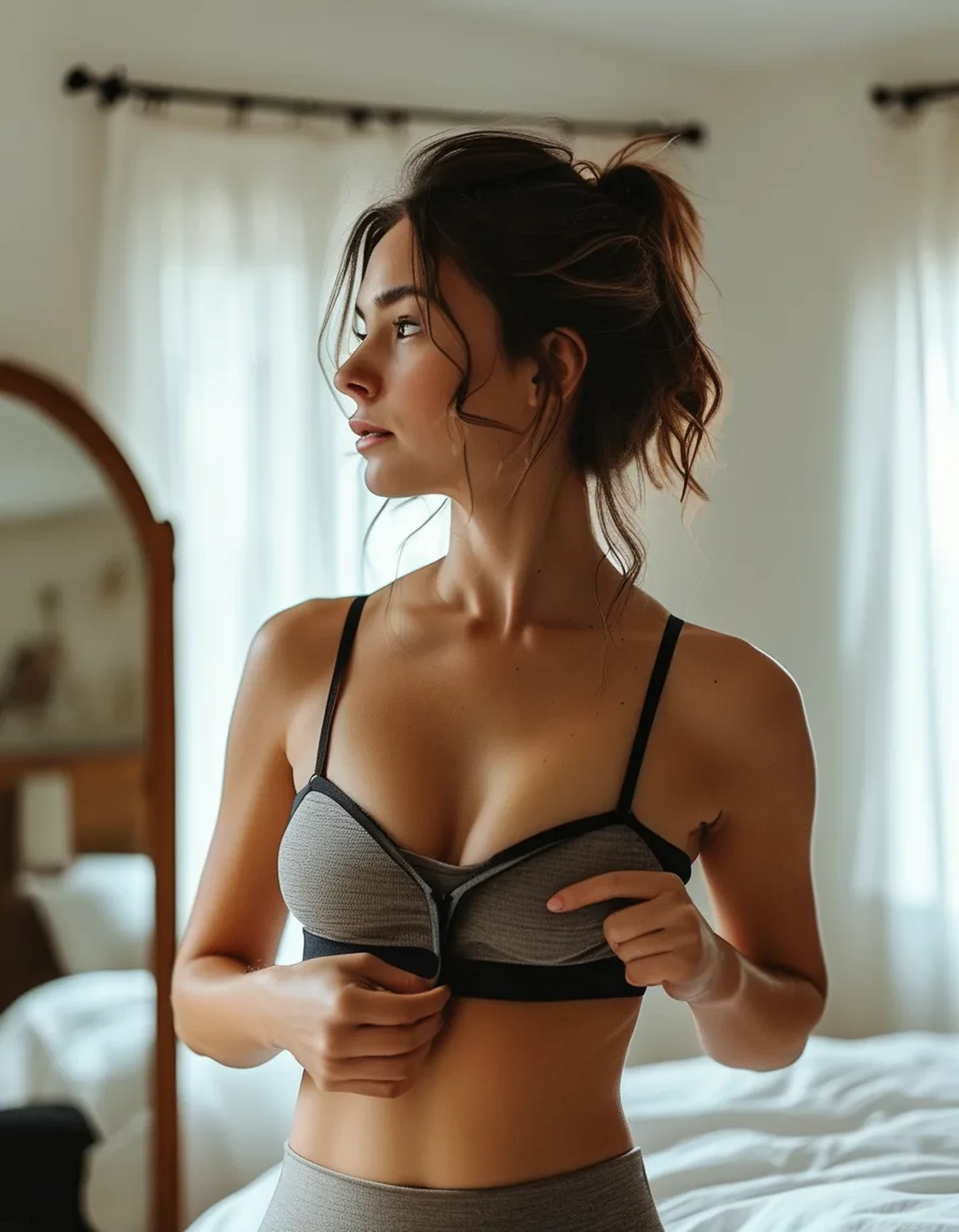
1. The loosest hook test. Fasten the band on the loosest setting. It should still feel firm. Bras are designed to be worn on the loosest hook when new, moving tighter as the elastic relaxes. If a bra is only supportive on the tightest hook, it has already used up its adjustment range.
For pull-on sports bras with no hooks, the equivalent: pull the band away from your body at the front. More than about 3-4cm of movement means the band has lost its support.
2. The strap test. Straps should not be doing most of the work. The band provides the majority of the support in a well-fitting bra - if you loosen the straps and the bra drops significantly, the band has failed.
3. The visual test. Hold the bra up. Look for wavy or rippled elastic in the band, fabric that has gone thin or slightly transparent under stretch, and any cup shape that no longer holds its form.
If it fails any of these, the fit problem is not seasonal. No adjustment fixes degraded elastic.
How long they should last: commonly six to twelve months with regular use. High-impact use, frequent washing, and tumble drying all shorten this considerably. If you train four times a week, replacing every six months or so is realistic rather than excessive.
What extends life: hand washing or a delicates bag on a cool cycle, air drying rather than tumble drying, and rotating between several bras rather than wearing one repeatedly.
What Nobody Tells You About Sports Bra Fit
The band does most of the work, not the straps. This is the most commonly misunderstood point in bra fitting. If your shoulders hurt, the band is almost certainly too loose and the straps are compensating. Tightening the straps makes it worse; a firmer band fixes it.
Most people are wearing the wrong size, and have been for years. A properly fitted bra frequently means a smaller band and a larger cup than people expect, and the difference in comfort and support is substantial.
Impact level matters more than most people account for. Running requires more support than yoga, and using a low-impact bra for high-impact activity is a common source of discomfort that gets misattributed to sizing. Many people need different bras for different activities.
Compression versus encapsulation. Compression bras flatten against the chest; encapsulation bras have separate cups. For larger cup sizes, encapsulation or a combination generally provides better support, and pure compression styles are frequently inadequate.
Rib cage size changes with training. Building back and chest musculature can change band size measurably over months. A bra bought at the start of a training programme may genuinely not fit a year later, and that is progress rather than a problem.
Cyclical breast changes are normal and often significant. Many people experience noticeable breast size and tenderness changes across the menstrual cycle. A bra that fits comfortably at one point in the cycle and not another is common, and having one slightly larger option is a practical solution rather than an indulgence.

How to fit a sports bra properly
Measure the band first. Snugly around the rib cage directly under the bust. Firm, not tight enough to compress. This is the number that determines everything else.
Measure the bust at the fullest point, standing normally, with a non-padded bra on.
The difference between the two gives the cup, though sizing systems vary by country and between brands, so treat any number as a starting point rather than an answer.
What to check in the changing room:
- The band sits level all the way round. If it rides up at the back, it is too loose
- Two fingers under the band is the standard check - firm but not painful
- No spillage at the top, the sides, or under the arm
- No gaping in the cup when you lean forward
- Straps adjustable and not digging in
The movement test, which most people skip: jump up and down, run on the spot, and swing your arms. A bra that fits standing still and not moving is not a sports bra. Any changing room allows this and it takes ten seconds.
Get professionally fitted at least once. Even if you buy online afterwards, a proper fitting establishes what size actually means for your body and what a correct fit feels like. Many people report the difference as dramatic.
Autumn practicality: this is a good month for fitting. Summer clearance means better prices, and you are buying for the indoor training season ahead. Buying two of a style that fits is worth doing when you find one.
What about pain, and when is it not a fit problem?
Some discomfort is a fitting issue and some is not, and the distinction matters.
Usually a fit issue:
- Shoulder grooving or pain - almost always a band that is too loose
- Red marks that fade within an hour - normal for a firm band
- Riding up at the back - band too loose
- Underwire poking - wrong cup size or shape
- Chafing at the seams - usually a size or style issue, sometimes fabric
Worth investigating further:
- Deep marks that persist for hours
- Pain during exercise that a correctly fitted bra does not resolve
- Breast pain that is new, persistent, or one-sided
- Any new lump, skin change, nipple change, or discharge
Breast pain in particular has many causes, many of them benign and cyclical, and it is not something to work around indefinitely. Anything new, persistent, or that concerns you should be checked by a doctor. This is general information, not medical advice.
On breast support and exercise generally: breasts have limited internal structural support, and unsupported movement during high-impact activity can be uncomfortable and is a genuine barrier to exercise for many people. A properly fitted sports bra is not a comfort accessory - for many people it determines whether they exercise at all.
If you have avoided running or high-impact activity because of discomfort, a professional fitting for a high-impact bra is worth doing before concluding the activity is not for you. It is one of the more common fixable barriers there is.
FAQ: Sports Bra Questions, Answered
How often should I replace a sports bra?
Commonly every six to twelve months with regular use. The loosest-hook test is more reliable than any timeframe - if it is not firm there, it is done.
Can I wash sports bras in the machine?
Yes, in a delicates bag on a cool cycle. Never tumble dry - heat is the fastest way to destroy elastane. Air drying roughly doubles the useful life.
Do I need different bras for different activities?
Many people do. Running and high-impact activity require considerably more support than yoga or strength training, and one bra rarely covers both well.
Why does my bra feel tighter in the morning?
Rib cage size can vary slightly through the day and across the menstrual cycle, and fluid retention plays a part. Some variation is normal; a bra that is only comfortable at certain times may be slightly too small.
Is it worth getting professionally fitted for a sports bra specifically?
Yes. Sports bra sizing differs from everyday bra sizing, and the fitting includes the movement testing that determines whether it actually works during activity.
TL;DR:
- Check the loosest hook first - if the band is not firm there, the bra is finished and no adjustment fixes it
- Summer use ages bras faster: more washing, more sweat, chlorine and salt all degrade elastic
- The band provides most of the support; shoulder pain almost always means the band is too loose
- Do the movement test in the changing room - jump, run on the spot, swing your arms
- Never tumble dry; air drying roughly doubles useful life
New, persistent, or one-sided breast pain, or any change in the breast or skin, is a doctor’s question. This is general information, not medical advice.
See It in Motion
Seen here: Racerback Tank Top - White — shop similar styles on bubblelime.com
Keep Reading
This article is for general informational and styling purposes only. Fit, sizing, and product availability may vary.