Your Sports Bra Fits Differently in September - Here Is Why
Quick Answer: A sports bra that fit in July often feels wrong in September for three measurable reasons: your ribcage expands with heat and contracts as temperatures drop, the elastic in a bra worn heavily all summer has lost roughly 10-20% of its recovery, and going back to a structured training schedule changes which activities you’re asking it to handle. Check the band on the loosest hook first - if it now needs the tightest hook, the elastic is done, not your body.
You pull on the same bra you’ve worn twice a week since June, and something’s off. The band that sat flat now creeps. Or the underband that felt fine suddenly leaves a red line by mid-morning.
Nothing’s wrong with you. Three things changed at once, and only one of them is about your body.

Why does my sports bra fit differently when the season changes?
Your ribcage measurement is not a fixed number. It changes across a day and across a season, and the difference is enough to move you a band size.
Heat expands, cool contracts. In hot weather blood vessels dilate, there’s more fluid in the tissue, and the ribcage sits fractionally wider. The commonly reported swing is up to about an inch across a hot day, which is why a bra can feel perfect at 7am and punishing at 6pm. As mornings cool in late August and September, that expansion reverses - and a band you sized for peak summer comfort can now feel loose.
Salt, sleep and cycle all move the number too. Fluid retention shifts with sodium intake, sleep quality and menstrual cycle phase. Most women see a measurable change in band comfort in the week before a period, which is normal and temporary.
Why this matters more than it sounds: the band does roughly 80% of the support work in a sports bra. Straps do far less than people assume. So a band that’s off by even half a size changes the entire support outcome - bounce goes up, the straps start compensating, and the shoulder pain that follows gets blamed on the straps.
The practical read: if the bra is otherwise in good condition and just feels slightly loose in cooler weather, move it in one hook and reassess. That’s what hooks are for, and most people never use more than one of them.
How do I tell if it’s my body or a worn-out bra?
One test settles it in ten seconds.
The hook test. A new sports bra should fit comfortably on the loosest hook. As the elastic relaxes over months of wear and washing, you tighten in. When you’ve reached the tightest hook and it still rides up, the bra is finished - no adjustment brings it back.
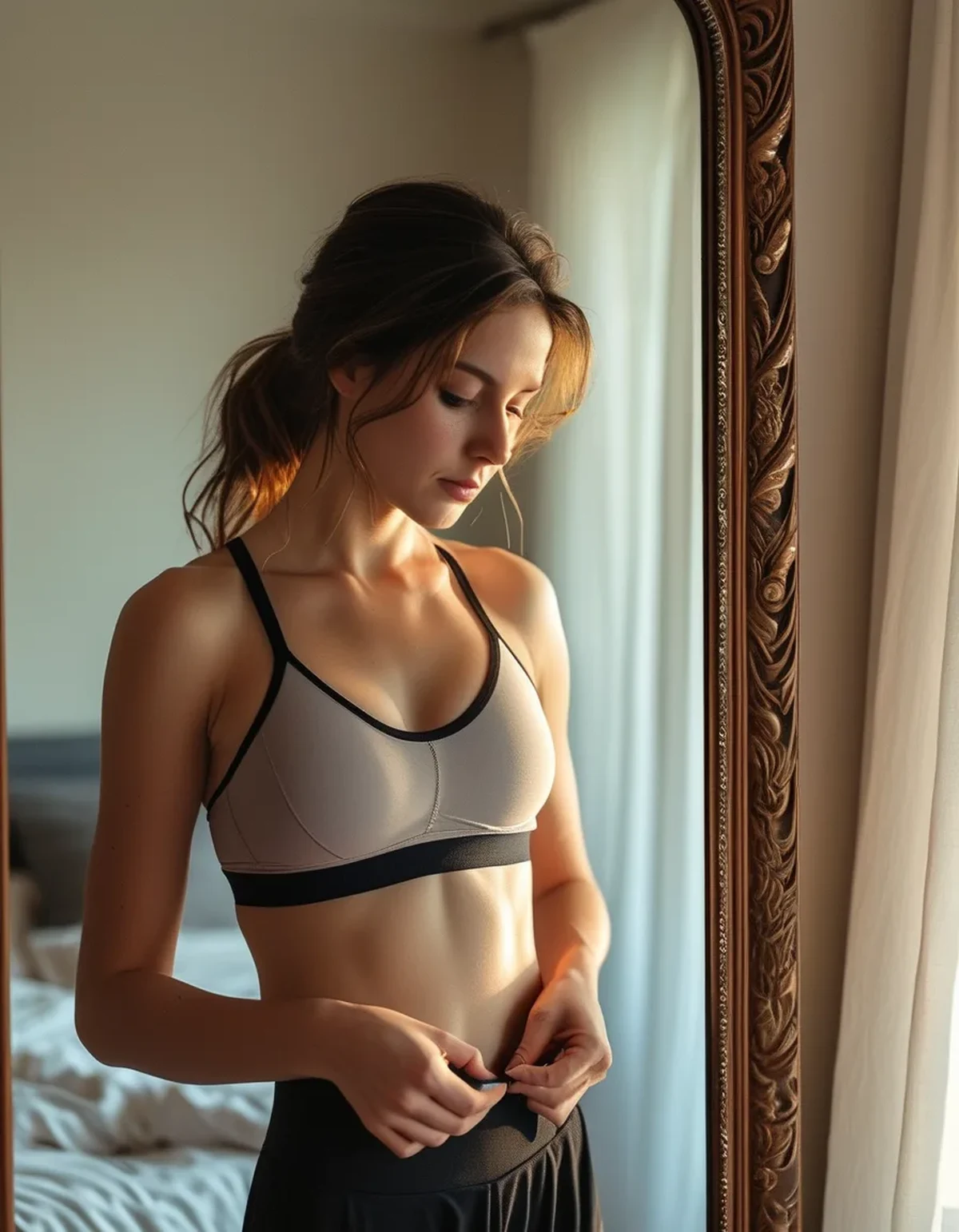
The overhead test. Put it on and raise both arms straight overhead. If the band lifts more than about an inch, it’s too loose or too tired. A band with intact elastic stays put.
The two-finger test. You should be able to slide two fingers under the band with mild resistance, and no more. Sliding a whole hand under means it’s not supporting anything.
Why summer is hard on elastic: heat, sweat salt, sunscreen, and chlorine all degrade elastane. Sweat is mildly acidic and salt is abrasive, and a bra that goes into a bag damp and stays there for hours gets the worst of it. A summer of three-times-a-week wear does more damage than a winter of the same frequency.
Realistic lifespan: roughly 30-40 wears for a heavily used high-impact bra, or 6-12 months at typical frequency. A bra worn hard through a hot summer sits at the short end of that range.
A rotation of three beats owning one favourite - elastic recovers between wears, and three bras in rotation last considerably longer than three worn one after another until each dies.
What changes when you go back to a structured schedule?
The activity mix changes in September, and support requirements change with it.
Summer training skews low-impact for a lot of people - swimming, walking, outdoor yoga, the occasional gym visit in air conditioning. Autumn brings back class schedules, running as the weather cools, and consistent lifting. Those are different demands.
Impact levels are not interchangeable:
- Low impact - yoga, pilates, walking, cycling. Compression style is fine.
- Medium - hiking, strength training, elliptical. Compression works for most, encapsulation is better for fuller busts.
- High - running, HIIT, jump rope, court sports. Encapsulation - separate structured cups - outperforms flat compression, and the gap widens as bust size increases.
The classic autumn mistake: using the summer yoga bra for the first cool-weather run. It was never designed for it, and the bounce it fails to control is what produces next-day soreness in the chest and upper back.
Match the bra to the hardest activity in your week, not the average. If you run once and do yoga four times, you still need a running bra for that one session.
One more autumn-specific detail: layering. A bra worn under a long-sleeve top and a jacket sits differently, and a wide racerback that felt fine bare can create a pressure point under two more layers. Check strap placement with the clothes you’ll actually train in.
5 Sports Bra Mistakes That Show Up Every Autumn
The recurring ones, in order of how often they happen.
1. Tightening the straps to fix a loose band. This is the most common and the most damaging. Straps carry maybe 20% of the load; tightening them transfers weight onto the trapezius and produces neck and shoulder pain within weeks. If the band is loose, the band is the problem - shorten it or replace the bra.
2. Sizing the band up because it feels tight. A supportive band should feel firm. Firm is not the same as painful. Pain, numbness, or a deep red groove that persists an hour after removal means too tight; a snug band that’s simply noticeable is doing its job.
3. Wearing it straight from the summer gym bag. Sweat that dries in place leaves salt crystals in the fibres, which cut elastic on the next wear. Rinse in cool water the same day if you can’t wash properly.
4. Machine drying, ever. Heat is the single fastest way to destroy elastane. Air dry flat, always - and never on a radiator once heating season starts, which is the autumn-specific version of the same mistake.
5. Keeping the whole collection. Most people own several dead bras and two working ones, then wonder why support feels inconsistent. Do a September audit: hook test each one, bin the failures. Three good bras beat eight of which five are finished.
FAQ: Sports Bra Fit Questions, Answered
Should I get remeasured every year?
Yes, or any time weight, training volume, or cycle phase changes noticeably. Measurements drift more than people expect, and most women are wearing a band that was correct two years ago.
Why does the band ride up at the back?
Almost always a band that’s too loose - it slides up to the narrowest part of the ribcage. Try a smaller band with a larger cup, which keeps the same overall volume while restoring the grip.
Can I wear a compression bra for running if I go a size down?
Not a good trade. Sizing down flattens rather than supports, restricts breathing, and creates chafing at the underband. Encapsulation at the correct size handles running far better.
How many sports bras do I actually need?
Three in rotation is the practical minimum if you train three or more times a week - one high impact, two for everything else. That gives elastic time to recover between wears.
Does washing in the machine ruin them?
Not if you use a mesh bag, cold water, and a gentle cycle with no fabric softener. Softener coats the fibres and reduces both wicking and elastic recovery, and it’s the part most people miss.
TL;DR:
- Ribcage size shifts with heat, fluid, and cycle - a band can genuinely feel different in September than in July
- The band does about 80% of the support work; straps do far less than people assume
- Hook test: new bras should fit on the loosest hook, and reaching the tightest one means it’s finished
- A hot summer of heavy wear shortens elastic life - expect 30-40 wears from a high-impact bra
- Match the bra to the hardest activity in your week, not the average one
- Rotate three rather than wearing one favourite into the ground
If your bra feels wrong this month, check the hooks before you blame your body. Nine times out of ten the elastic answered the question already.
See It in Motion
Seen here: Round Neck Long Sleeve Athletic T-Shirt — shop it on bubblelime.com
Keep Reading
This article is for general informational and styling purposes only. Fit, sizing, and product availability may vary.