How Many Sports Bras Do You Actually Need in Rotation? The Real Math
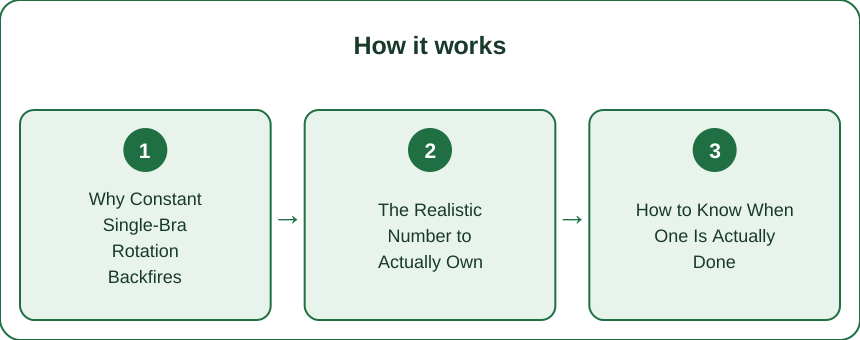
Wearing the same one or two favorite sports bras on repeat feels efficient, but it quietly shortens their working life and reduces the support they actually provide — elastic needs recovery time between wears just like muscles need recovery between workouts. Here is why constant single-bra rotation backfires, the realistic number to actually own, and how to know when one is genuinely done.
Why Constant Single-Bra Rotation Backfires
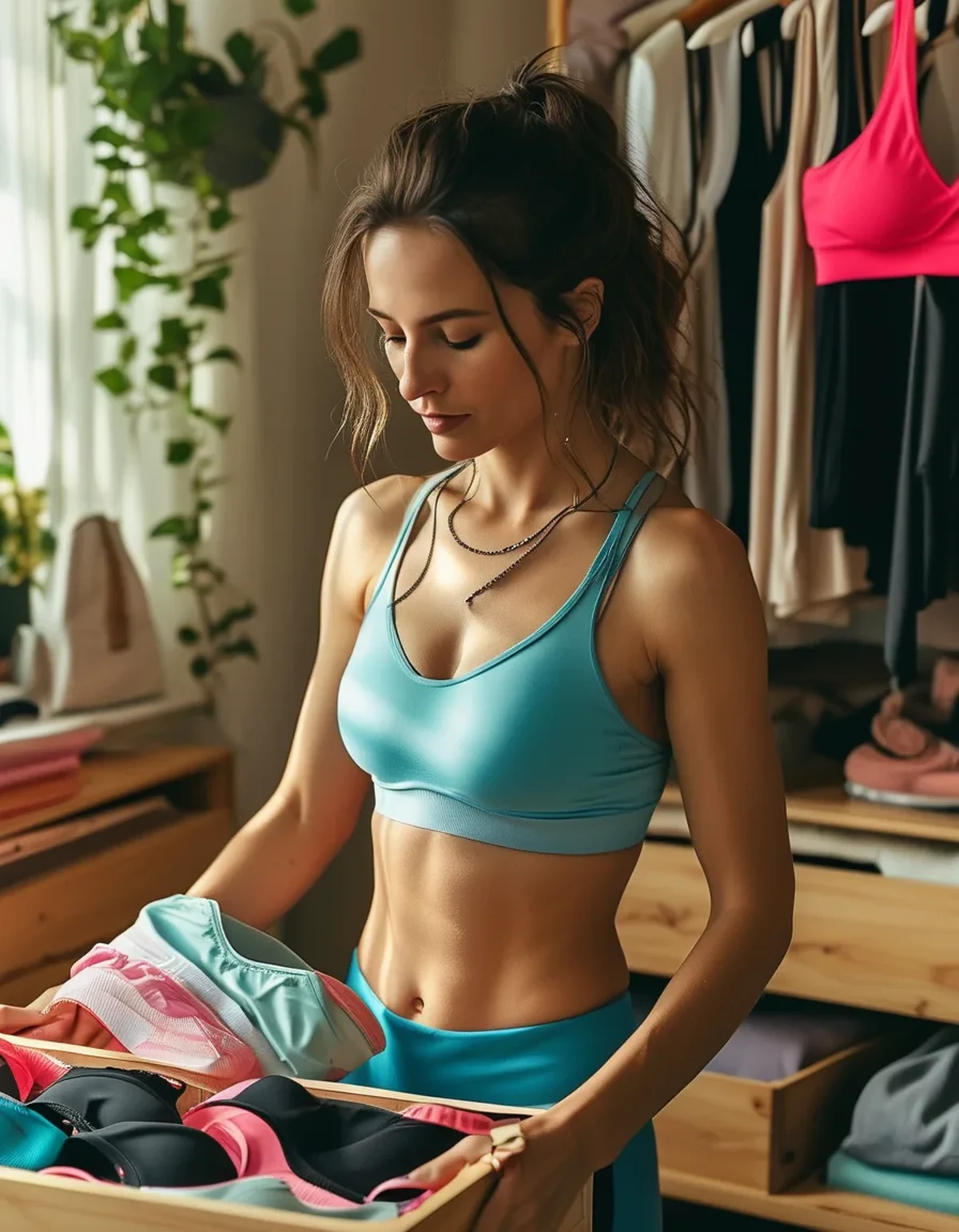
The elastic-recovery logic: the the-elastane-needs-recovery-time-between-wears (the stretched elastic fibers needing roughly a day to recover their shape after being worn and washed, similar to how running shoes need rest between uses — the elastic-has-a-recovery-curve-too), the the-back-to-back-wear-compounds-stretch (the wearing and washing the same bra repeatedly without a rest day accelerating permanent stretch and support loss from the compression-fit-and-sizing-guide logic — the no-rest-day-means-faster-degradation), the the-frequent-washing-of-one-item-accelerates-wear (the higher wash frequency on a single favorite bra directly increasing its cumulative heat and agitation exposure faster than a rotated set would — the more-washes-per-item-means-faster-breakdown), the the-support-degrades-before-it-looks-worn-out (the support capacity often declining well before any visible wear appears, meaning a favorite bra can be quietly underperforming for weeks before it looks like time to replace — the support-loss-is-invisible-until-you-compare-it-to-a-fresh-one), the the-underestimating-total-annual-cost-of-one-bra (the one heavily used bra actually costing more per wear over a year than a small rotation, once faster replacement frequency is factored in — the one-bra-worn-hard-isn’t-actually-cheaper), and the reframe (the constant single-bra habit as false economy — it feels efficient in the moment but degrades support faster and often costs more per wear over a year than a proper rotation would).
The Realistic Number to Actually Own
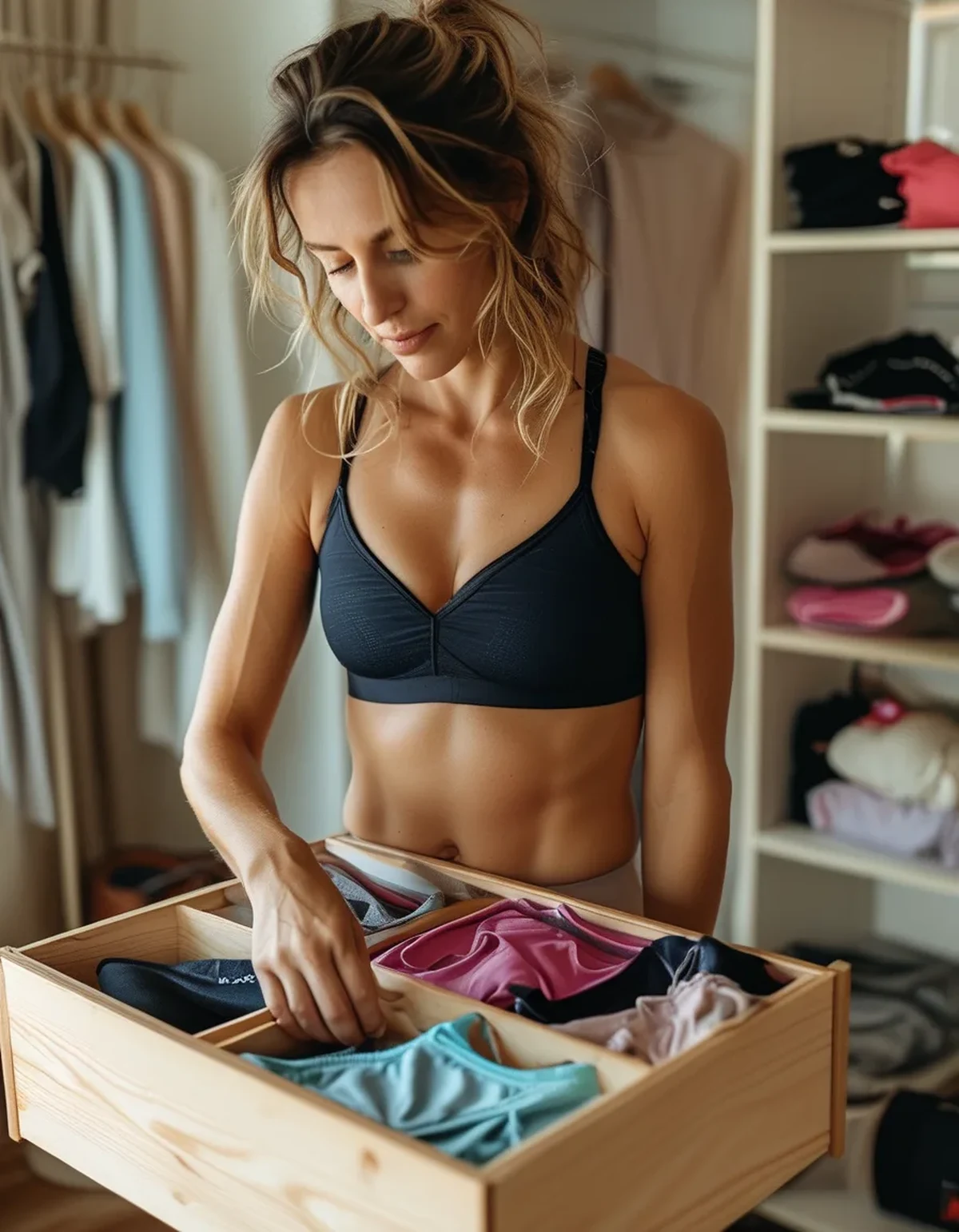
The practical math: the the-minimum-functional-rotation-is-three (the three sports bras allowing one to be worn, one to be freshly washed, and one as a recovery buffer, covering most weekly workout frequencies — the three-covers-the-basic-recovery-cycle), the the-frequent-exercisers-benefit-from-four-to-five (the working out five or more times weekly benefiting from a slightly larger rotation to keep pace with wash frequency and recovery time — the higher-frequency-needs-a-slightly-larger-set), the the-different-activities-may-need-different-support-levels (the high-impact activities like running needing a different bra than low-impact yoga, which naturally expands a practical rotation beyond a single style — the activity-variety-naturally-expands-the-count-too), the the-a-dedicated-laundry-day-item-helps-more-than-more-bras (the a fast-drying option specifically for wash day sometimes mattering more than simply owning more total bras — the a-fast-drying-piece-solves-the-rotation-problem-differently), the the-quality-over-quantity-still-applies (the three well-constructed bras outperforming six poorly made ones for both support and actual lifespan — the fewer-good-ones-beats-many-mediocre-ones), and the frame (the realistic number as three as a functional minimum, four to five for frequent exercisers, expanded further by activity variety — a specific, evidence-based number rather than an arbitrary shopping list).
How to Know When One Is Actually Done
The real end-of-life signs: the the-band-no-longer-snaps-back (the elastic band failing to return to its original size after stretching being the clearest sign of genuine elastic failure — the the-band-recovery-test-is-the-most-reliable-check), the the-straps-require-constant-readjustment (the straps that need repeated tightening during a single workout signaling lost elasticity, not just a loose fit that day — the constant-readjustment-during-one-session-is-a-tell), the the-visible-pilling-or-fabric-thinning (the fabric visibly thinning or pilling at high-friction points indicating structural fabric breakdown, not just cosmetic wear — the visible-fabric-change-usually-means-support-change-too), the the-compare-side-by-side-with-a-newer-bra (the direct comparison against a newer bra of the same style making support loss obvious in a way it isn’t when judged alone — the a-side-by-side-comparison-reveals-what-daily-wear-hides), the the-underwire-or-band-hardware-showing-through (the any structural hardware becoming visible or poking through fabric being an unambiguous end-of-life signal, not a repairable issue — the hardware-showing-through-means-replace-not-repair), and the frame (the real end-of-life signs as failed band snap-back, constant strap readjustment, visible fabric breakdown, a revealing side-by-side comparison, and exposed hardware — specific, checkable signs rather than a vague sense that it’s probably time).
Wearing the same favorite sports bra constantly shortens its working life and quietly reduces support well before it looks visibly worn out, since stretched elastic fibers need roughly a day of recovery between wears the same way muscles need rest between workouts, and higher wash frequency on a single item accelerates cumulative wear faster than a rotated set would. The practical minimum is three bras in rotation to allow proper recovery time, expanding to four or five for people working out five or more times a week, with different activities like running versus yoga naturally justifying different support styles within that rotation. Know a bra is actually done when the band no longer snaps back to size, straps need constant readjustment mid-workout, fabric visibly pills or thins at friction points, a side-by-side comparison against a newer bra reveals a clear support gap, or structural hardware becomes visible through the fabric.
See It in Motion
Seen here: UPF 50+ Racerback Yoga Tank Top — shop it on bubblelime.com
Keep Reading
This article is for general informational and styling purposes only. Fit, sizing, and product availability may vary.