When Your Sports Bra Cup Size and Band Size Don't Match Standard Charts
Standard sports bra sizing charts assume a fairly predictable relationship between band size and cup size, and a significant number of real bodies simply don’t follow that assumed proportion — leading to a frustrating cycle of trying size after size with no chart actually fitting correctly. Here is why standard charts fail this way, the specific mismatch patterns that cause the most trouble, and the workarounds that actually help.

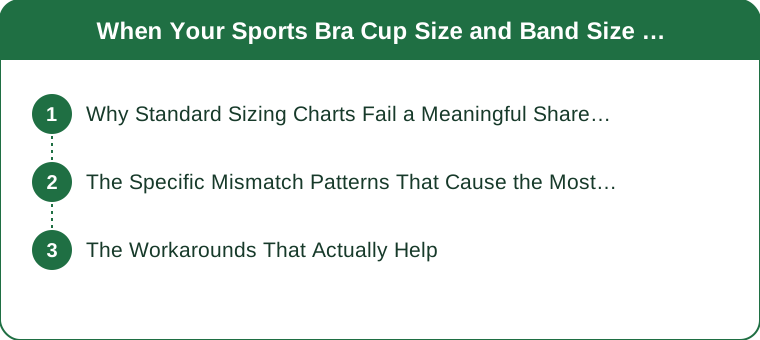
Why Standard Sizing Charts Fail a Meaningful Share of Bodies
The structural sizing problem: the the-charts-assume-a-single-proportional-relationship (the standard sizing built around an assumed typical ratio between band and cup measurement, when real body proportions vary far more widely than a single ratio can capture — the one-ratio-cant-fit-every-actual-body), the the-sports-bras-have-less-size-granularity-than-everyday-bras (the sports bra sizing, per the how-to-measure-sports-bra-size-guide logic, often using broader size bands like small-medium-large rather than precise band-and-cup combinations, collapsing more variation into fewer categories than standard bra sizing — the fewer-size-categories-means-more-people-fall-between-them), the the-support-structure-fits-differently-at-different-proportions (the same overall size sometimes providing very different actual support depending on where on the band-to-cup spectrum a body sits, even within the labeled size, from the underwire-vs-wireless-sports-bra-guide logic — the the-support-mechanism-itself-doesnt-scale-evenly-across-proportions), the the-brands-calibrate-their-charts-to-different-assumed-populations (the different brands building their size charts around different assumed ‘typical’ proportions, meaning a mismatch with one brand’s chart doesn’t predict a mismatch with another’s — the a-bad-fit-in-one-brand-doesnt-mean-a-bad-fit-everywhere), the the-fuller-bust-and-band-mismatches-are-especially-common (the a fuller bust paired with a smaller band, or the reverse, being a particularly common mismatch pattern that standard mid-range charts handle especially poorly, relevant to the best-sports-bras-fuller-bust population — the this-specific-mismatch-pattern-is-common-not-rare), and the reframe (the chart mismatch as a real limitation of standardized sizing systems, not a sign your body is unusually hard to fit).

The Specific Mismatch Patterns That Cause the Most Fitting Frustration
The recognizable patterns: the small-band-large-cup-mismatch (the a smaller band size paired with a larger cup size than the chart’s assumed ratio, often resulting in a bra that’s tight around the ribs while still lacking adequate cup coverage — the the-most-commonly-reported-mismatch-pattern), the the-large-band-small-cup-mismatch (the reverse pattern, where band comfort requires sizing up, but the resulting cup ends up too roomy and unsupportive at that larger size — the equally-real-but-less-discussed-mismatch), the the-asymmetry-between-the-two-sides (the a genuine size difference between left and right, common and normal, but poorly served by any standard chart’s assumption of symmetry — the natural-asymmetry-standard-charts-dont-account-for), the the-shape-not-just-size-affects-fit-within-the-same-measurements (the two people with identical band and cup measurements needing different actual bra shapes or support styles due to breast shape and tissue distribution differences — the shape-variation-adds-a-dimension-charts-dont-capture-at-all), the the-size-needs-shifting-with-cycle-or-weight-changes (the size needs genuinely fluctuating with the menstrual cycle or minor weight changes in ways a fixed chart size can’t accommodate dynamically — the fit-needs-arent-even-fixed-over-time-for-one-body), and the frame (the common mismatch patterns as small-band-large-cup, large-band-small-cup, natural asymmetry, shape variation independent of size, and cyclical fluctuation — recognizable, common, and none of them a sign of an unusual body).
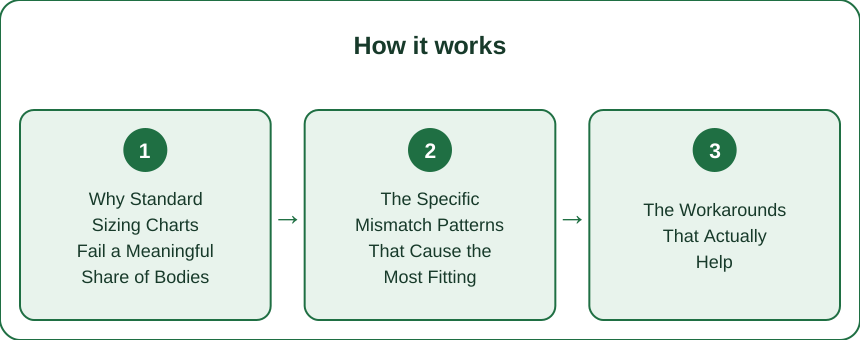
The Workarounds That Actually Help
What genuinely works: the size-by-fit-not-by-the-label-on-the-tag (the trying on and assessing actual fit and support regardless of what size label the garment carries, since the label is far less meaningful when your proportions don’t match the chart’s assumption — the fit-the-body-not-the-number-on-the-tag), the the-seek-out-brands-with-separate-band-and-cup-sizing (the specifically choosing brands offering true separate band-and-cup sizing for sports bras, similar to standard bra sizing, rather than only small-medium-large tiers, when a mismatch is significant — the separate-sizing-brands-solve-the-core-structural-problem-directly), the the-try-multiple-styles-not-just-multiple-sizes-within-one-style (the a support style mismatch sometimes being the real issue rather than size at all, meaning switching styles — encapsulation versus compression — can solve what sizing alone couldn’t, per the high-impact-support-guide logic — the sometimes-the-style-not-the-size-is-the-actual-fix), the the-use-a-fitting-specialist-or-detailed-virtual-fit-tool-for-persistent-mismatches (the a professional fitting, in person or via a detailed brand-specific virtual tool, catching nuances a self-measured chart lookup misses — the professional-input-helps-with-a-genuinely-hard-to-fit-body), the the-accept-that-different-brands-may-serve-different-needs-simultaneously (the using one brand for high-impact activities and a different brand for low-impact ones, rather than expecting one single brand to solve every fit need — the multiple-brands-for-multiple-needs-is-a-reasonable-outcome-not-a-failure), and the frame (the workaround as sizing by actual fit rather than the label, seeking brands with true separate band-and-cup sizing, trying different support styles rather than just different sizes, using professional fitting input for persistent mismatches, and accepting that different brands may serve different needs — practical accommodation for a real limitation in standardized sizing, not a personal fitting failure).
Standard sports bra sizing charts fail a meaningful share of bodies because they’re built around a single assumed ratio between band and cup size, sports bras often collapse fit into broader small-medium-large tiers with less granularity than standard bra sizing, and different brands calibrate their charts to different assumed typical proportions — meaning a mismatch with one brand’s chart doesn’t predict a mismatch with another’s. Common, entirely normal mismatch patterns include a small band paired with a larger cup or the reverse, natural asymmetry between the two sides, breast shape variation that affects fit independent of measurements, and needs that genuinely fluctuate with the menstrual cycle or minor weight changes. The workarounds that actually help are sizing by how the garment actually fits and supports rather than trusting the label, seeking out brands that offer true separate band-and-cup sizing rather than broad size tiers, trying different support styles since a style mismatch is sometimes the real issue rather than size, using a professional fitting or detailed virtual fit tool for a persistently hard-to-fit body, and accepting that different brands may simply serve different needs rather than expecting one brand to solve everything.
See It in Motion
Seen here: UPF 50+ Racerback Yoga Tank Top — shop it on bubblelime.com
Keep Reading
This article is for general informational and styling purposes only. Fit, sizing, and product availability may vary.