Why One Sports Bra Strap Digs In and the Other Does Not
Quick Answer: A strap that digs in on one side almost always means the band is doing less work on that side, or your ribcage and shoulder are not symmetrical. Tighten the band before you touch the strap, loosen the digging strap slightly rather than tightening the other, and check whether the same shoulder is the one that carries your bag.
You take the bra off after a workout and there is a clear red line on the right shoulder and nothing on the left. Same bra, same body, same hour. It looks like a manufacturing defect and it is almost never a manufacturing defect.

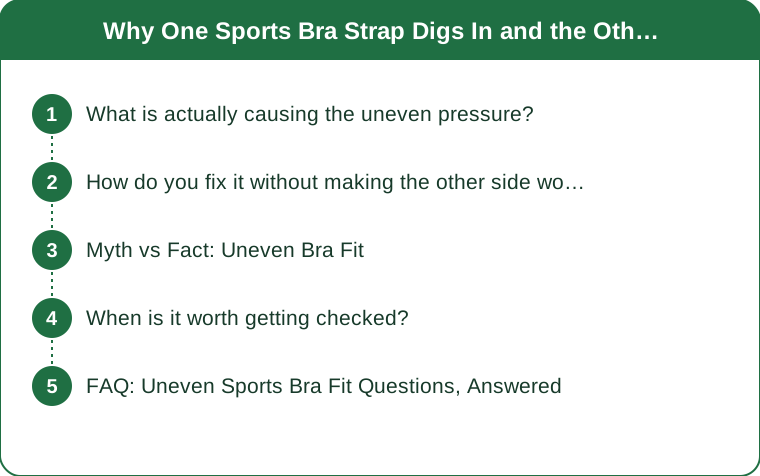
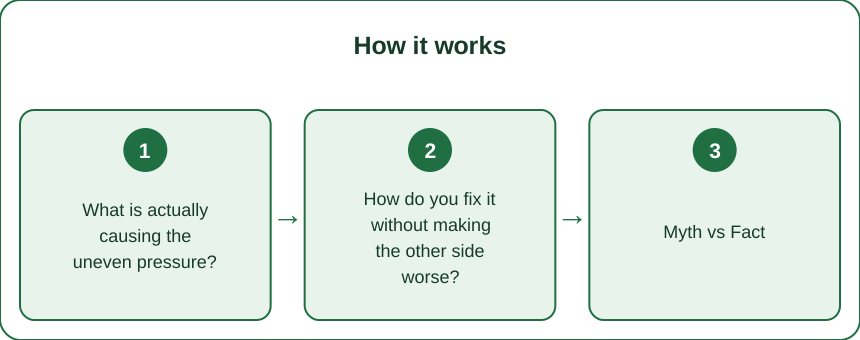
What is actually causing the uneven pressure?
A sports bra distributes load between the band and the straps. The band should be carrying roughly 80 percent of it. When one side of the band loses grip, the strap on that side quietly takes over - and a strap carrying weight it was not designed to carry is what produces a groove.
Three things cause that shift:
Rib asymmetry. Almost everyone has one side of the ribcage that sits slightly higher or flares slightly more. A band that is snug on the smaller side can be loose on the larger side, and the loose side hands its job to the strap.
Shoulder slope. One shoulder is commonly a little lower than the other, often the dominant side. A lower, more sloped shoulder gives the strap less shelf to sit on, so it slides toward the neck and concentrates pressure in a narrower path.
Breast volume difference. A size difference between sides is normal - most people have one that is measurably larger. More volume on one side means more downward load on that side.
The useful part: all three point at the same fix, and none of them require a new bra.
How do you fix it without making the other side worse?
The instinct is to tighten the strap that feels loose. That is backwards, and it is why people end up with two sore shoulders instead of one.
Start with the band. Put the bra on and run two fingers under the band at the side seam on each side. If one side gives noticeably more, that is your loose side. Go down a band size or move to the tighter hook set. A band that grips evenly removes most strap problems on its own.
Then loosen the digging strap, do not tighten the quiet one. A strap that is too short pulls the cup upward on that side and drags the band up with it, which loosens the band exactly where you need it. Let it out a centimetre at a time and re-check.
Then check the strap width and placement. Narrow racerback straps concentrate load over a smaller area, which a sloped shoulder feels immediately. A wider strap or a U-back style spreads the same load over more surface.
Then look at the fuller side. If one cup is visibly straining while the other has a small gap, fit the bra to the larger side and take up the difference on the smaller one with the strap adjustment. Squeezing the larger side into the smaller side’s fit guarantees the pressure goes into the strap.
Give each change a full workout before making another one. Changing three variables at once tells you nothing.

Myth vs Fact: Uneven Bra Fit
Myth: A red mark means the bra is too small. Fact: A red mark means pressure was concentrated somewhere. That is usually a loose band pushing load into a strap, which is a fit distribution problem, not a size problem. A faint pink line that fades within twenty minutes is normal contact. A groove that lasts an hour is not.
Myth: Both sides should feel identical. Fact: Bodies are not symmetrical. The goal is that neither side hurts, not that both sides feel the same.
Myth: Tighter straps mean more support. Fact: Straps that carry the load create shoulder and neck pain and do very little for bounce control. Support comes from the band. This is the single most common sports bra mistake.
Myth: If you carry a bag on the digging shoulder, it is unrelated. Fact: A bag worn on one shoulder day after day changes how that shoulder sits and how it tolerates pressure. Switch sides for two weeks and see whether the sensitivity follows the bag.
Myth: Asymmetry means something is wrong. Fact: Mild differences in rib shape, shoulder height, and breast volume are extremely common and not a medical concern on their own.
When is it worth getting checked?
Most of the time this is a fit issue you can solve in an afternoon. A few patterns are worth mentioning to a professional.
Numbness or tingling in the arm or hand during or after wearing a bra should not be dismissed as tight straps. Persistent nerve symptoms deserve an actual assessment.
A change in asymmetry that appeared recently - one side becoming noticeably larger or shaped differently over weeks or months, rather than having always been that way - is worth mentioning at your next appointment. So is any new skin dimpling, puckering, or change in the nipple.
Shoulder pain that persists on rest days and is not related to wearing anything suggests the shoulder itself, not the bra.
Pain that has moved into the neck with headaches at the base of the skull can be a load-distribution problem that has been running for a long time. A physio can tell you in one session whether it is postural.
This is general information, not medical advice. The bra fix is cheap and fast, so it is a reasonable first step - but if changing the band and straps for three or four weeks changes nothing, the bra was probably not the source.
FAQ: Uneven Sports Bra Fit Questions, Answered
Why does only one sports bra strap dig in?
Usually because the band has lost grip on that side, so the strap is carrying load meant for the band. Rib asymmetry, a lower shoulder, and a larger breast on that side all push in the same direction.
Should I tighten the strap that feels loose?
No. Loosen the one that is digging instead. Tightening the loose side pulls the band up and typically creates a second sore shoulder rather than fixing the first.
Is it normal to have one breast bigger than the other?
Yes, it is very common and usually has been that way since development. Fit the bra to the larger side. A noticeable change that develops over weeks or months is worth mentioning to a doctor.
TL;DR:
- A digging strap almost always means a loose band on that side, not a small bra.
- Fix the band first, then loosen the digging strap - never tighten the quiet one.
- Wider straps or a U-back spread load better across a sloped shoulder.
- Fit to the larger side and adjust the smaller one; asymmetry is normal.
One red shoulder is information, not a defect. It is telling you which side of the band gave up first - and that is a five-minute adjustment, not a new bra.
See It in Motion
Seen here: Round Neck Long Sleeve Athletic T-Shirt — shop it on bubblelime.com
Keep Reading
This article is for general informational and styling purposes only. Fit, sizing, and product availability may vary.