Why Your Sports Bra Chafes Under the Band - and How to Stop It
Quick Answer: Band chafing is friction plus moisture plus salt. Sweat softens the skin under the band, dried sweat leaves abrasive salt crystals, and the band micro-slides against that softened skin thousands of times per workout. Fix it with a properly snug band that does not travel, a smooth wide underband, an anti-chafe balm applied before you sweat, and a rinse as soon as the workout ends.
You finish a run, peel the bra off, and there is a raw pink stripe under your bust that stings in the shower. The bra fit fine in the store. It fit fine in May, even. What changed is not the bra - it is the conditions it is working in.

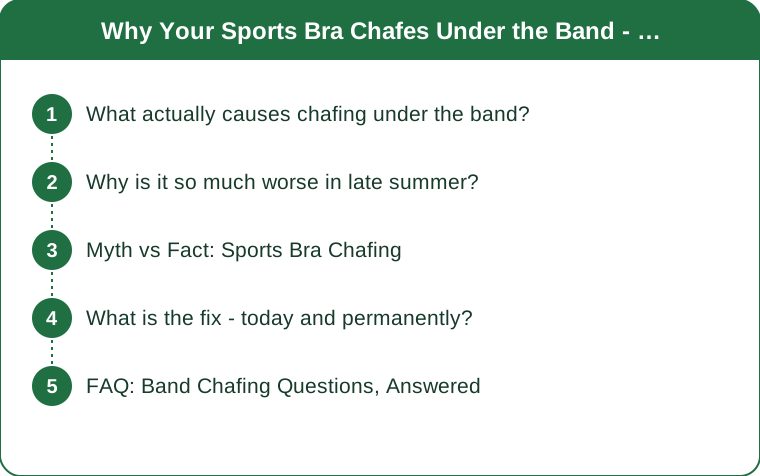
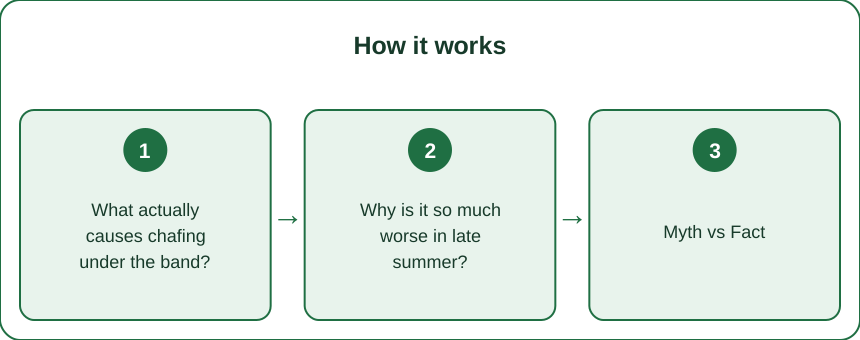
What actually causes chafing under the band?
Three ingredients, and you need all three for skin to break down.
Friction. The band is the highest-pressure contact point on a sports bra, and it does not sit still. Your ribcage expands and contracts with every breath, and every stride or jump shifts the band a millimeter or two against the skin. A single slide is nothing. Ten thousand of them in an hour is an abrasion.
Moisture. Wet skin is mechanically weaker than dry skin. Sweat soaks into the outer layer and softens it - the same effect as skin going pale and fragile under a bandage. A band rubbing on softened skin does damage that the same band on dry skin never would.
Salt. This is the ingredient people miss. As sweat evaporates, it leaves salt crystals behind in the fabric and on your skin. Salt is abrasive. By the second half of a long workout, the band is effectively lined with very fine sandpaper, which is why chafing shows up on hour-long sessions but not twenty-minute ones.
The location is predictable too. Chafing concentrates where pressure and movement meet: the center front where the band flexes with your breathing, under the bust where sweat pools, and at the side seams if your bra has them. If your raw spot always appears at a seam, the seam is the problem. If it appears everywhere the band touches, the conditions are.
Why is it so much worse in late summer?
Because August stacks the deck on all three ingredients at once.
Humidity stops evaporation. In dry air, sweat evaporates and your skin stays relatively dry. In the sticky weeks of late summer, sweat sits on the skin and soaks the band completely, so the softened-skin problem runs for the entire workout instead of the last stretch of it.
You sweat more, so there is more salt. Higher sweat volume means a higher salt load in the fabric, and if you are re-wearing a bra that was not properly rinsed, you are starting the workout with yesterday’s salt already in the band.
Sessions move outdoors and get longer. A 45-minute humid outdoor walk produces more band movement and more sweat than the same workout in air conditioning.
And damaged skin never gets a day off. Chafing that would heal in two or three days keeps getting re-opened by the next workout, so what starts as mild irritation in July becomes a persistent raw patch by late August. This is why the fix has two halves - preventing new friction and letting the current damage actually close.
One more late-summer contributor: sunscreen. Applied near the band line, some formulas mix with sweat into a slightly gritty film that makes friction worse. Keep sunscreen above the neckline of your workout top and let it absorb fully before the bra goes on.

Myth vs Fact: Sports Bra Chafing
Myth: Chafing means the band is too tight. Fact: It more often means the band is too loose. A loose band travels with every breath and stride, and travel is friction. A snug band that stays put usually chafes less than a loose one that wanders. Tightness is only the culprit when the band leaves a deep pressure groove rather than a friction burn.
Myth: Cotton is gentler on skin. Fact: Cotton absorbs sweat and holds it against you, keeping skin soft and vulnerable for the whole session. A wicking synthetic band that moves moisture away is kinder, even though cotton feels softer in your hands.
Myth: Powder is the fix. Fact: Powder works for about twenty minutes, then mixes with sweat into a paste that can make friction worse. A balm or stick that stays waterproof through sweat is the reliable option.
Myth: It will toughen up if you push through. Fact: Skin does adapt to pressure, but repeatedly broken skin does not toughen - it scars, and it can develop patches of darker pigmentation that outlast the season.
Myth: A bigger band size solves it. Fact: Sizing up adds travel, and travel is the engine of the whole problem. Solve chafing with fit, fabric, and lubrication - not with looseness.
What is the fix - today and permanently?
For skin that is already raw: wash gently with plain water or a fragrance-free cleanser, pat dry, and apply a simple barrier - petroleum jelly or a zinc-based balm. Skip anything scented or exfoliating until it closes. Give it genuinely easy days: a different style of bra whose band sits higher or lower, a low-sweat workout, or a rest day. Re-opening the same spot daily is what turns a one-week problem into a two-month one. If a chafed area becomes increasingly red, swollen, weepy, or you see a rash with small satellite spots spreading under the bust, that pattern can mean a skin infection or a fungal rash rather than simple friction - have it looked at. This is general information, not medical advice.
To stop it coming back:
- Fix the band fit first. On the loosest hook or a fresh bra, the band should be level, snug enough that two fingers slide under with mild resistance, and it should not shift when you raise your arms. A high-impact sports bra only controls bounce if the band stays anchored - and an anchored band barely slides.
- Choose a smooth, wide underband. Wider spreads pressure; smooth bonded or seam-free underbands remove the ridge that saws at skin. If your current bra has a prominent center-front seam, that bra is for low-sweat days.
- Balm before, rinse after. A thin layer of anti-chafe balm under the band before you dress, and a rinse of both skin and bra as soon as the session ends so salt never dries in place.
- Rotate two bras. Elastic needs a day to recover, and a fully dry bra always chafes less than one still damp from yesterday.
- Retire the dead ones. A band that has stretched out cannot stay put no matter how you hook it. If you are on the tightest hooks and it still travels, that bra is done.
FAQ: Band Chafing Questions, Answered
Why does my sports bra suddenly chafe when it never used to?
Usually one of three changes: the elastic has aged and the band now travels, your sessions got longer or sweatier with summer, or you changed detergent and residue is stiffening the band fabric. Check the band fit on the tightest hook first.
What can I put on sports bra chafing?
For prevention, an anti-chafe balm or stick applied under the band before exercise. For healing, a plain barrier like petroleum jelly on clean, dry skin. Avoid scented lotions on broken skin - they sting and slow healing.
Should the band be loose if I chafe?
No. A loose band moves more, and movement is the cause. You want snug and stationary, with the pressure spread across a wide, smooth band.
Is it chafing or a heat rash?
Chafing is a defined stripe or patch exactly where the band sits, and it stings. Heat rash is scattered small bumps that prickle and can appear beyond the band line. Chafing needs friction control; heat rash mostly needs cooling and dry skin. A spreading, persistent, or weepy rash deserves a professional look.
TL;DR:
- Band chafing is friction, sweat-softened skin, and abrasive dried salt working together.
- Late summer makes it worse: humidity keeps skin wet, sweat volume raises the salt load, and daily workouts keep re-opening the same spot.
- A snug band that does not travel beats a loose one - travel is the engine of chafing.
- Balm before, rinse immediately after, rotate two bras, and retire any band that wanders on the tightest hook.
The stripe under your bust is a maintenance report, not a fact of life. Anchor the band, kill the salt cycle, and it stops.
See It in Motion
Seen here: UPF 50+ Short Sleeve Rashguard Swim Shirt — shop it on bubblelime.com
Keep Reading
This article is for general informational and styling purposes only. Fit, sizing, and product availability may vary.